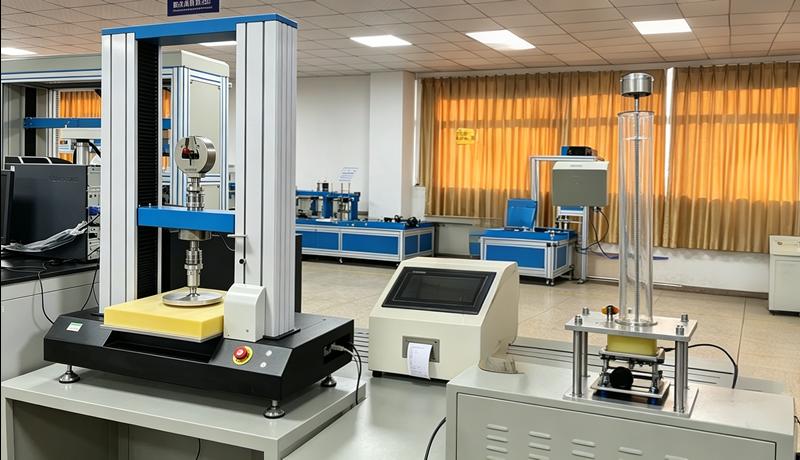
How to Make Our Fabric Slipcover Sofa Seat More Durable — Strict HR Foam Standards for Seat Cushion
When you sit on a sofa, the first thing you notice is how it feels — is it too firm, too soft, or just right? But what really determines that feeling, and more importantly, how long that good feeling lasts? The answer lies in the foam inside the seat cushion. At Hanleide Furniture, we've identified five critical foam performance indicators that directly impact both comfort and durability. Here's what they are — and how we hold them to a higher standard.
1. Foam Density — The Foundation of Support
Density is the most basic measure of foam quality. Simply put, higher density foam contains more material per unit volume, which means stronger support and better long-term durability. Low-density foam may feel soft at first, but it breaks down quickly.
Our standard: We use only High-Resilience (HR) foam with a minimum density of 35 kg/m³ in all our seat cushions. This ensures a solid foundation that won't sag or lose shape after months of use.
2. IFD Hardness & ILD Support Factor — The Feel and the Support
IFD (Indentation Force Deflection) measures how firm the foam feels when you sit on it — essentially, how much force is needed to compress it. ILD (Indentation Load Deflection) is the support factor that tells you how well the foam supports your body weight as you sink in.
These two work together. The right IFD gives you a comfortable initial feel, while a strong ILD ensures your body is properly supported without bottoming out.
Our standard: We control IFD within 30–60 N depending on the application, and we require an ILD support factor of at least 2.8%. This combination delivers a balanced sit — plush enough for comfort, firm enough for support.
3. Resilience — The Bounce-Back Factor
Resilience measures how quickly and effectively foam returns to its original shape after being compressed. A higher resilience means the cushion bounces back faster, giving you that pleasant "push" when you stand up. It's also the single most important indicator of overall seat feel.
Our standard: We set our resilience requirement at a minimum of 65% — significantly higher than the industry norm. This means our cushions recover quickly and maintain their lively, comfortable feel over time.
4. Compression Fatigue — The Hidden Durability Killer
This is the indicator most manufacturers overlook — but it's the one that matters most for long-term customer satisfaction. Compression fatigue measures how much the foam degrades after repeated use, in two ways:
- Hardness loss rate — how much firmness the foam loses over time
- Thickness loss rate — how much the cushion height decreases (i.e., sagging)
A cushion that looks great in the showroom but sags after six months? That's a compression fatigue problem.
Our standard: We test every batch of foam and enforce strict limits: hardness loss must be less than 6%, and thickness loss must be less than 3%. This is how we ensure our seat cushions stay comfortable and supportive for years, not months.
Why These Standards Matter to You
Every sofa cushion we make is built around these five indicators. We don't just buy foam off the shelf — we specify, test, and verify each batch against our internal standards, which are deliberately set above what the industry typically requires. The result is a seat cushion that feels great from day one and stays that way.
If you're sourcing fabric slipcover sofas for your customers, the foam inside the cushion is what determines whether they'll be happy a year down the road — or frustrated with a sagging seat. At Hanleide Furniture, we make sure it's the former.
Want to Learn More About Our Foam Standards?
Contact us to discuss your cushion specifications or request our detailed foam test reports.
Get in Touch